How Families, Caregivers, and Care Teams Work Best Together
When home care is working well, it can look almost effortless from the outside. The caregiver arrives, care happens, the family feels informed, and the older adult feels supported. Nobody is scrambling, nobody is surprised, and the people involved feel like they're pulling in the same direction.
That experience doesn't happen by accident. It's the result of a communication structure — clear roles, consistent check-ins, and a shared understanding of what good care looks like for this specific person — that most families don't think to ask about until something goes wrong.
This is what professional home care, done well, actually looks like behind the scenes.
------------------❤️------------------
Three Roles, One Goal
Every home care arrangement involves at least three parties: the family, the caregiver, and the care team at the agency. Each brings something different to the situation. Each has a different vantage point. And the quality of care depends significantly on how well those three perspectives are integrated.
✔️ The family holds the history. They know who this person has been — their values, their preferences, the things that matter most to them, the things that upset them. They have emotional investment that no professional relationship can replicate. And they're often the first to notice when something feels off, even if they can't articulate exactly what.
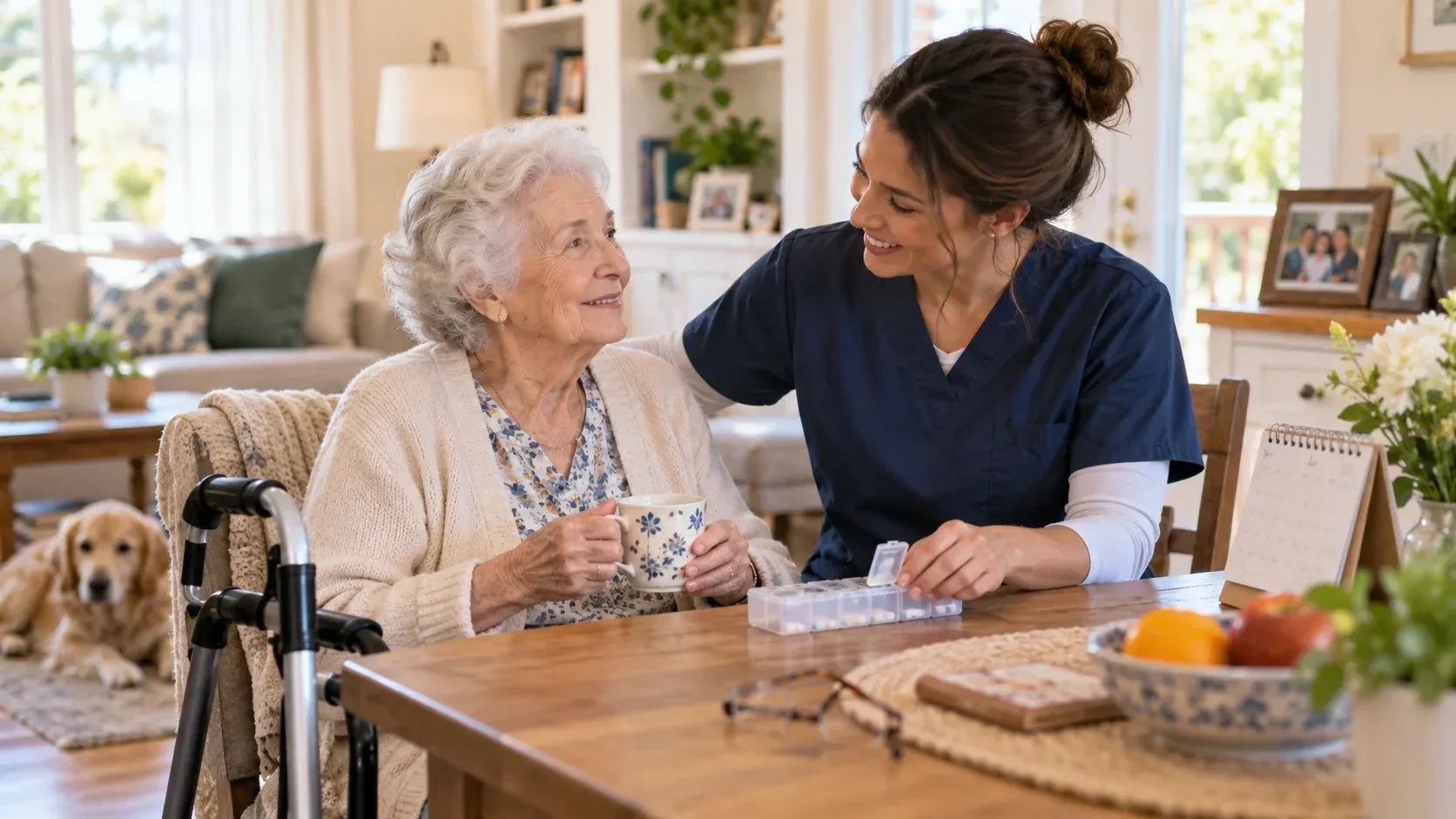
✔️ The caregiver holds the daily reality. They observe the client across repeated visits, in real functional moments — the morning routine, the meal, the afternoon walk. They build the relationship through which trust is extended and needs are expressed. They're positioned to notice gradual changes that don't show up in a doctor's appointment or a family visit.
✔️ The care team — the coordinators, nurses, and clinical staff at the agency — holds the professional infrastructure. They maintain the care plan, manage scheduling and coverage, provide clinical oversight, and serve as the communication hub that keeps the other two parties informed and aligned.
When these three function as a team rather than three separate actors, the result is care that is coherent, adaptive, and genuinely attentive. When they operate in silos — when the family doesn't communicate with the caregiver, or the caregiver's observations don't reach the care coordinator, or the agency is simply a scheduling service rather than an active clinical presence — gaps open up. And gaps in care, especially for older adults with complex needs, have
consequences.
------------------❤️------------------
What Good Communication Actually Looks Like
Communication in home care doesn't need to be elaborate. It needs to be consistent, specific, and two-directional.
✔️
From family to caregiver:
Families are the experts on the person being cared for. That knowledge is most useful when it's shared proactively — not just at the initial assessment, but on an ongoing basis. When a parent had a difficult night. When a family visit revealed something that seemed off. When preferences or needs have shifted. When there's a medical appointment coming up whose results may affect the care plan. These aren't interruptions to the caregiver's work — they're inputs that make the work better.
✔️
From caregiver to family and care team:
A caregiver's daily observations are clinical data. Changes in appetite, mood, mobility, or cognition. Medications that are being refused or mismanaged. A fall that was caught in time — or nearly wasn't. The client mentioning pain they haven't mentioned to anyone else. This information needs a reliable path to the people who can act on it — both the family and the professional care team. Agencies that have structured
reporting processes, rather than relying on informal communication, ensure that observations don't get lost.
✔️ From care team to family: Families should expect to hear from the care team regularly — not just when there's a problem. Routine check-ins, care plan reviews, and proactive updates signal that the agency is actively managing the care, not just deploying a caregiver and stepping back. When families have to chase information, that's a structural problem worth naming.
------------------❤️------------------
When Family and Caregiver See Things Differently
It happens in even the best-functioning arrangements: the family observes something about their parent's care that concerns them, and the caregiver's perspective is different. Or the caregiver notices a change that the family is reluctant to accept.
These moments are not failures. They're information — and handled well, they're opportunities.
The key is that neither perspective gets dismissed. A family's concern about a caregiver's approach deserves a real conversation, not a defensive response. A caregiver's clinical observation deserves to be taken seriously, even when it's difficult to hear. The care coordinator exists, in part, to facilitate exactly these conversations — to hold the professional middle ground and ensure that both the family's knowledge and the caregiver's observations find their way into decisions about care.
Families who feel comfortable raising concerns directly — who don't worry that bringing something up will create awkwardness or result in a less attentive caregiver — are families who are in a well-functioning care relationship. That comfort doesn't happen by accident. It's built through a culture of openness that the agency sets from the beginning.
------------------❤️------------------
Respecting the Older Adult's Voice
In any discussion of how families and care teams work together, there's a risk of talking around the person at the center of it all. The older adult receiving care is not just a subject of coordination — they're a participant in it, with preferences, boundaries, and a perspective that deserves to shape the arrangement.
Good care teams actively solicit the client's feedback. Does the current schedule work for them? Is there anything they'd like more or less of? Is there something they've been reluctant to mention? The answers sometimes differ from what the family expects, and that's valuable — it means the care is being calibrated to the person, not to someone else's idea of what that person needs.
When families, caregivers, and care teams are all listening to the same person, alignment tends to follow naturally. When each party is responding to their own version of what the client needs, the arrangement drifts.
------------------❤️------------------
What to Look for in an Agency
The communication culture of an agency shows up early if you know what to look for. Some questions worth asking before care begins:
How will I be updated about what's happening during visits? What happens when a caregiver observes something clinically significant — who does it go to, and how quickly? How often is the care plan reviewed, and who initiates that process? If I have a concern about care quality, what's the process for raising it? Who is my primary point of contact when I have questions?
The answers tell you whether the agency is designed to function as a team, or whether the family is expected to do the coordination work themselves.
At Philia, the care team — including a Director of Nursing and dedicated care coordinators — stays actively involved throughout the care relationship, not just at the beginning. Families have consistent points of contact, caregivers have structured reporting processes, and the care plan is treated as a document that evolves with the client. That structure is what makes everything else possible.
------------------❤️------------------
A Team Worth Building
Home care works best when it's approached as a genuine collaboration — one where each party's contribution is valued, communication flows in multiple directions, and the older adult at the center feels the coherence of people working together on their behalf.
That kind of care doesn't just meet needs. It builds the trust and stability that makes aging in place sustainable over the long term.
If you're in the Washington DC, Bethesda, or Arlington area and want to understand what that structure looks like in practice, we'd welcome the conversation.
While the information provided in this blog is intended to be informative and helpful, it's important to consult with a qualified professional for personalized advice. If you have any concerns or questions about your health or specific medical conditions, don't hesitate to reach out to your physician or another trusted healthcare provider. Your health is important, and seeking professional guidance ensures you receive the best care tailored to your individual needs.